FDP on “Engaging Gen Z Students” by Dr. L. S. Ganesh
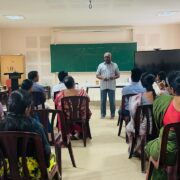
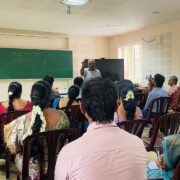
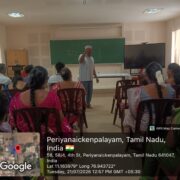
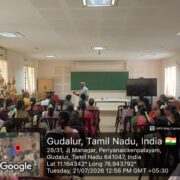
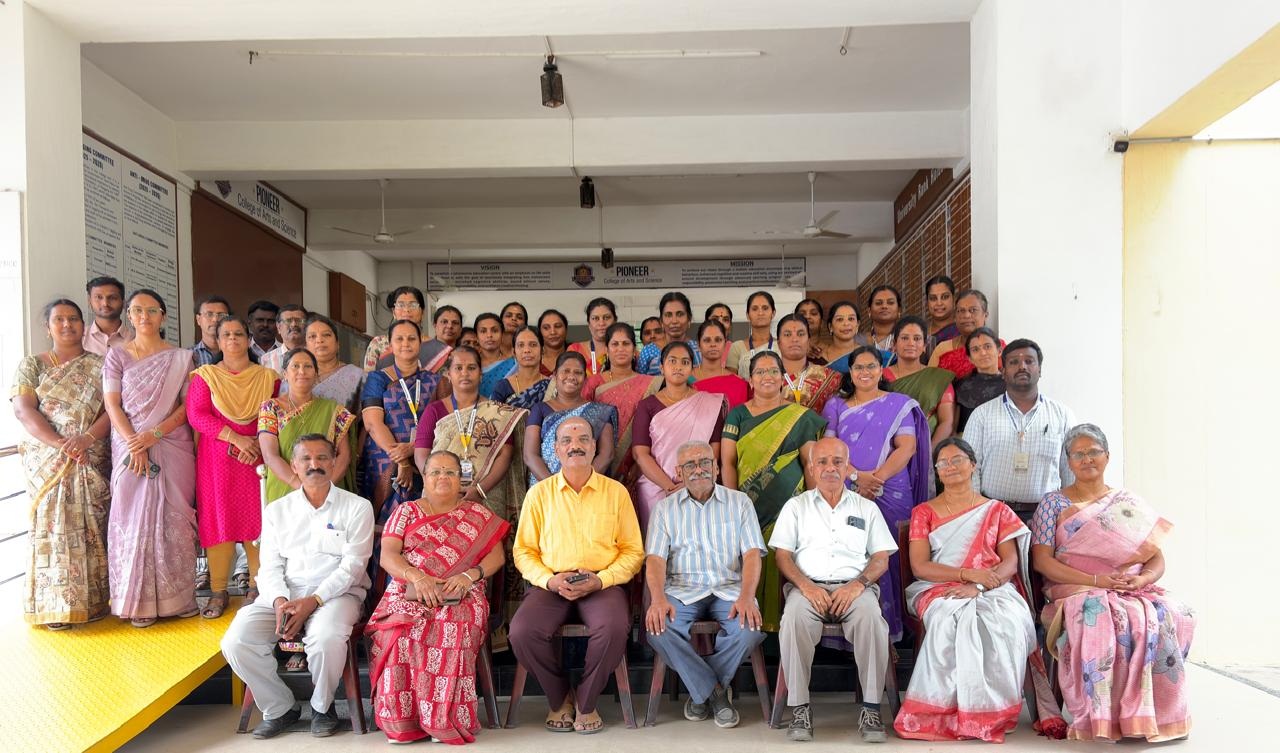
Pioneer College of Arts and Science organised a Faculty Development Programme (FDP) on “Engaging Gen Z Students” on 21 July 2026 (Tuesday) from 9:30 a.m. to 1:00 p.m. at the Conference Hall. The programme was organised with the objective of equipping faculty members with a deeper understanding of Generation Z students and enabling them to adopt effective, student-centric approaches in teaching and mentoring.
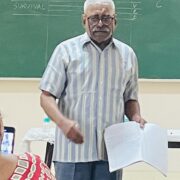
The session was led by Dr. L. S. Ganesh, Former Dean (Students), IIT Madras, and Former Vice Chancellor, ICFAI Foundation for Higher Education, Hyderabad, who served as the Resource Person. The programme was organised by Dr. V. Ramachandran, Administrative Officer. Dr. K. Murugesan, Principal, honoured the Resource Person as a gesture of appreciation.The programme commenced with an insightful discussion on the basic aim of human life and the different dimensions and stages of human needs. The resource person explained how individual aspirations gradually extend towards social responsibilities and broader human values.
The programme commenced with an insightful discussion on the basic aim of human life and the different dimensions and stages of human needs. The resource person explained how individual aspirations gradually extend towards social responsibilities and broader human values.
The session highlighted three important categories of human needs:
- Vital Needs – Basic requirements essential for survival and existence.
- Desirable Needs – Requirements that enhance comfort, satisfaction, and quality of life.
- Essential Needs – Fundamental requirements necessary for meaningful and purposeful living.
A significant aspect of the session was the emphasis on the uniqueness of every individual. The participants were encouraged to embrace the principle that “exceptions should be treated exceptionally.” This perspective is particularly relevant while engaging with Gen Z learners, whose learning preferences, interests, expectations, values, and challenges can vary considerably.
The FDP provided valuable insights into the aspirations, behavioural patterns, and expectations of Gen Z students. Faculty members were encouraged to understand students as individuals and to create learning environments that are inclusive, engaging, empathetic, and meaningful.
The programme was informative, thought-provoking, and enriching, offering practical insights that can be applied to classroom teaching, mentoring, student counselling, and overall student development. The session reaffirmed the importance of understanding the changing generation of learners and empowering educators to connect with them more effectively. All faculty members actively participated in the FDP, making the programme a meaningful and enriching experience. “Empowering Educators. Inspiring Futures.”
“Empowering Educators. Inspiring Futures.”